WORKS
ABOUT
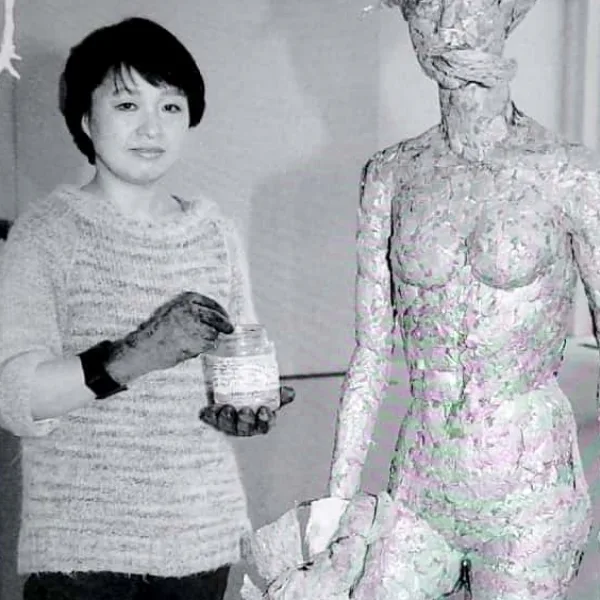
Lee Kang-ja was a painter and sculptor who worked between Seoul and New York. The late Lee Kang-ja (1946–2002) was born in Daegu and graduated from the Department of Sculpture at Seoul National University College of Fine Arts. In 1998 she organized an invitational exhibition in Korea of the film actor Anthony Quinn, and arranged meetings between Quinn and the late Presidents Kim Young-sam and Kim Dae-jung and Cardinal Stephen Kim Sou-hwan. She died a year after the last exhibition she held, “Korea Fantasy,” at the POSCO Museum in Seoul in 2001. With the unusual background of an entire family of artists, she stood alongside siblings who represented the art world of their time in calligraphy, Western painting and sculpture, such as Lee Hwa-ja and Nam-hong, at the 1999 “Lee Gi-in (Dongho) Family Exhibition” at the Seoul Arts Center, and opened galleries in the United States and Korea to help Korean artists, including her brother, the Western painter Lee Kang-so, and Cho Young-nam, debut in the U.S. and exchange life and inspiration.
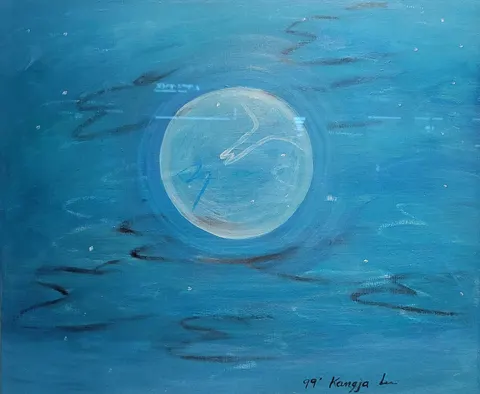
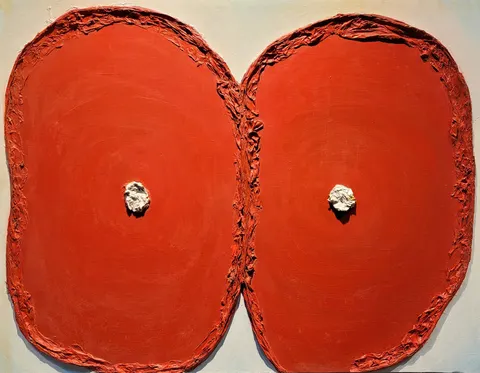
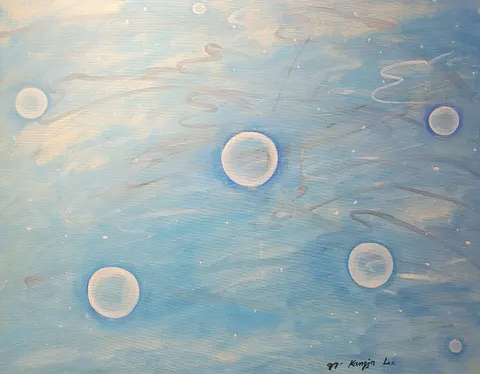
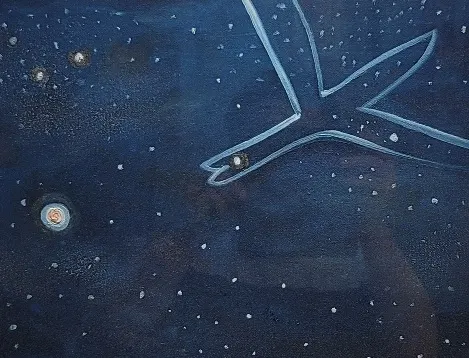
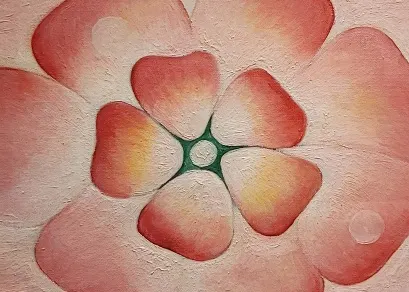
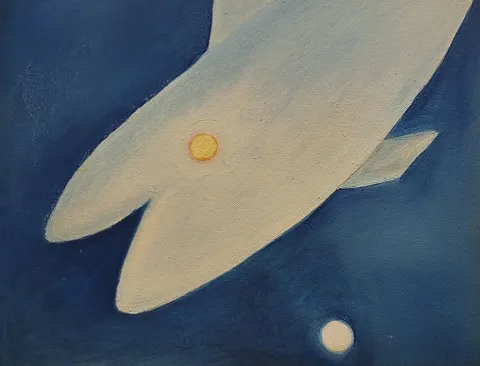
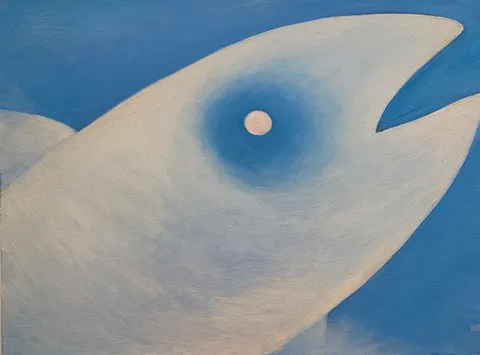
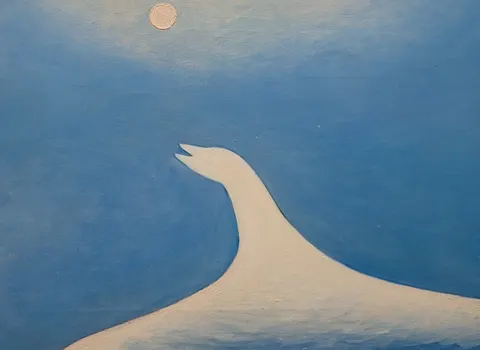
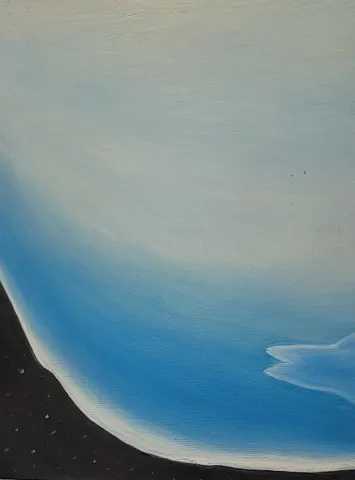
“Where Am I Going?” Lee Kang-ja is an interpreter of nature and of the environment. Born and raised in Daegu, and influenced by the unspoiled beauty of Jeju Island, she came to communicate with nature even more than with people. “My friend is the sky, and my energy comes from the sky.” “The sky knows… the earth knows.” Her thinking flows with rhythms, like the clouds ever-changing in that sky. With a large installation of various predatory birds, each swallowing smaller fish or chasing another, she created scenes of the constant struggle between the strong and the weak, survivalism, and spent her career experimenting with the issues of life. In New York in 1986 an installation was exhibited in which many birds hung from the ceiling, as if big fish were catching small fish and eating the fish below. Each day the artist changed the order of the scenes that followed. “I am interested in making dimension and time. In any case, after years of seeking answers and experimenting, I achieved a sense of emotional freedom… and I want to create feeling and converse with the world.” Audiences will see that Lee Kang-ja’s paintings and installations express universal emotions that transcend cultural boundaries, so no label can be attached to explain the work. In a recent exhibition, the space around an installation of abstract works in papier-mâché evoked a mystical energy. Lee mainly uses off-white with touches of blue and red. Small wisps of blue or red are glued onto the canvas over the white hanji formation. Two large panels evoke the horizon. There is serenity on the ground. The artist asks the audience to understand it, too. Lee Kang-ja is an original talent who devoted herself to making her art one with nature, and she wishes to share her intimate feelings through her work. “My work is my life,” she said, and confessed that “holding an exhibition is like stripping naked.”
— Kwon Jo-jin, editor, The New York Times, October 1994
KOREA FANTASY
I am a history of four thousand years, and the land of three thousand ri of rivers and mountains embroidered like silk. I am also eternal history, the world, and the universe. In my body are earth, wind, the sun and history (existence). My ki is Korea (the universe), and the song of this Korea (universe) joins paintings of 1. vision (trees, stones and earth), 2. perception (abstraction and figuration), 3. heart (abstraction), 4. action (performance: scenes of the working process) and 5. realization, and 6. shows the historical background that records the origin of the earth, stones and trees. I want to use not another’s language but my own, Korean (the land of brocaded rivers and mountains), as my vocabulary (in comfortable Korean), and show it to the world. With the earthy smell of the soil of Daegu where I was born, with slightly rough but solid stone (granite: the strength of ki) and pine (the joy and radiance of ki), I arrange Korea Fantasy, in which the sound of wind, the song of birds and the sound of water (traces of ki) are shown, heard, smelled, touched, felt, thought about and tasted, along with video capturing the origin, that is, the background, of these historic objects. I plan to let you hear a conversation between myself and me, my song, our song.
Biography
Education
- 1985 Graduate School, State University of New York at Albany
- 1981 Graduate School of Education, Ewha Womans University
- 1971 BFA in Sculpture, Seoul National University
Career
- Professor, Department of Art, Seoul National University of Education
Solo exhibitions
- 1999 Seoul Arts Center
- 1999 Seoul Art Center
- 1997 Daegu Culture and Arts Center
- 1994 Hena-Kent Gallery, New York
- 1993 Hena-Kent Gallery, New York
- 1989 Maeil Shinmun Gallery, Daegu
- 1989 Saem Gallery
- 1989 Hwawon, Daegu
- 1989 Palgongsan, Daegu
- 1988 Saem Gallery
- 1988 Maekhyang Gallery, Daegu
- 1987 Window Broadway, New York
- 1986 Korean Gallery, New York
- 1986 Det Gallery, Daegu
- 1985 Kwanhoon Gallery
- 1984 State University of New York Gallery
- 1984 Su Gallery, Daegu
Group exhibitions
- 1999 Dongho Lee Gi-in Family Exhibition, Seoul Arts Center
- 1998 Korean Contemporary Art Exhibition, National Museum of Modern and Contemporary Art
- 1992 Seoul/New York ’92, Korean Gallery, New York
- 1991 22 Artists from East and West, Hena-Kent Gallery, New York
- 1991 Sounds of Colors, Hena-Kent Gallery, New York
- 1991 Korean Artists in the U.S., Kumho Museum of Art
- 1991 Nine New York Artists, Dongwon Gallery, Daegu
- 1991 24 Korean Artists in New York, Hena-Kent Gallery, New York
- 1989 Women’s Art of the 1980s
- 1986 Contemporary Korean Art in New York, Korean Gallery, New York