WORKS
ABOUT
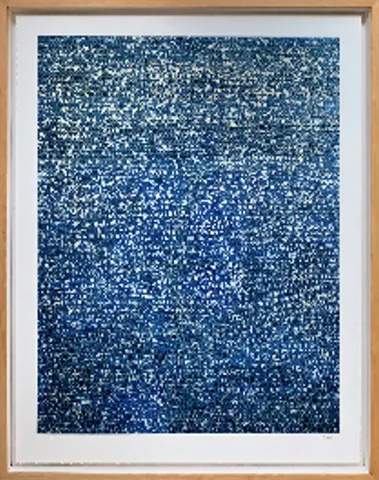
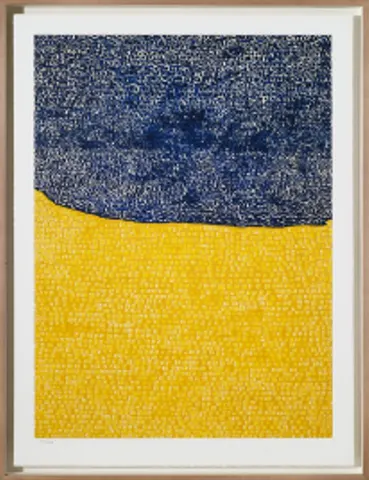
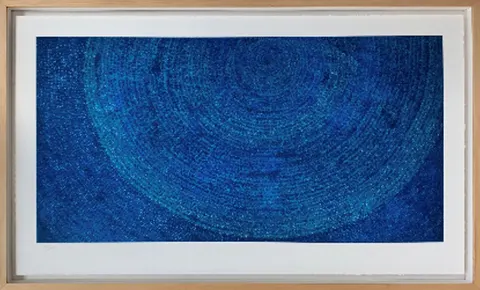
A pioneer of Korean abstract art and a painter representing twentieth-century Korean art. Using distinctly Korean subjects such as mountains and rivers, sky, moon and clouds, white porcelain and traditional patterns, and abstracting them progressively into dots, lines and planes, he painted his all-over dot paintings. He began from geometric abstraction and made semi-abstract works rooted in an Eastern sensibility. After going to the United States, he took in the New York painting of the time and turned fully to abstraction. Nine of the ten most expensive works by a Korean artist sold to date are by Kim Whan-ki. Ironically, however, he suffered financial hardship during his years living abroad.
Biography
- Graduated from Anjwa Public Elementary School; left Joongdong Middle School before graduating; graduated from a high school in Tokyo; graduated from the Department of Fine Arts, Nihon University; Master’s degree, Nihon University Graduate School (Fine Arts)
- Held 14 solo exhibitions at home and abroad and received the Grand Prize at the Korea Art Grand Prize Exhibition organized by the Hankook Ilbo in 1970.
- His work started from the geometric abstraction of his early period and showed a semi-abstract world rooted in Eastern contemplation and refined taste; after going to the United States he turned fully to abstraction and embraced a new current of optical style.
- Representative works include “Rondo,” “Mountain,” “Mountain Moon,” “Nocturne” and “Where, in What Form, Shall We Meet Again?” “Rondo” was registered as Registered Cultural Heritage No. 535 of the Republic of Korea.